Special Invitees Group 58: A Microcosm of Democratic Practice
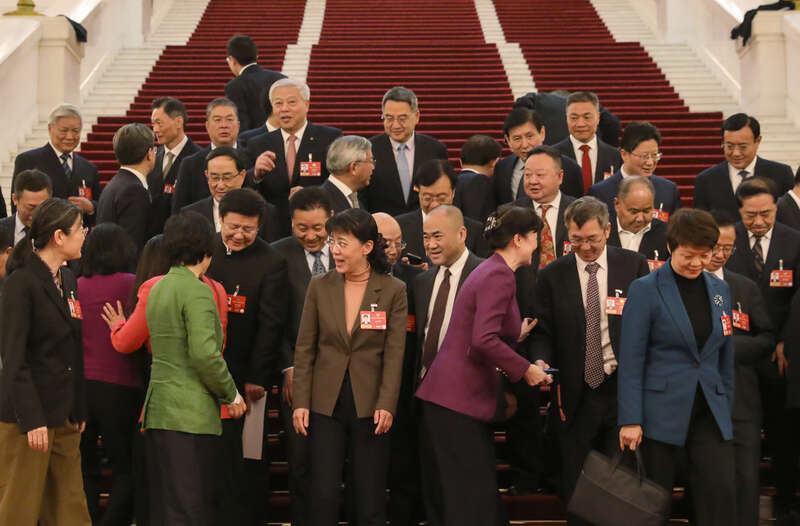
■ The 14th National Committee of the Chinese People's Political Consultative Conference (CPPCC) comprises over 2,000 members, who are divided into 58 groups during its plenary sessions. An official from the Proposals Committee Office of the CPPCC National Committee noted that Group 58 exhibits the least commonality but the greatest diversity among all groups, yet it has demonstrated highly effective performance in fulfilling its duties.
■ From the 5,061 proposals submitted in 2025, the CPPCC National Committee selected 100 "Annual Outstanding Proposals". The only group proposal among them came from Group 58.
■ There are currently 41 members in Group 58. The youngest is Guo Jihui, born in 1983. The most senior in terms of CPPCC membership is Sangding Dugzha Pamo Deqen Qozain, a female living Buddha of Tibetan Buddhism, who has served nine consecutive terms. The group comprises several members of the Chinese Academy of Sciences and Chinese Academy of Engineering, vice provincial governors, scions of established families and distinguished experts spanning multiple disciplines — constituting a collective distinguished by both societal breadth and academic depth.
——————————
Ahead of the 2026 CPPCC National Committee session, six members visited service areas along the Beijing-Tianjin Expressway.
Zhou Xiaoying, former head of the discipline inspection and supervision group dispatched by the Central Commission for Discipline Inspection and State Supervision Commission to the United Front Work Department of the Central Committee, was among the participants. They convened during the Spring Festival travel rush. At a highway service area, she approached a child's mother after the elementary student returned from the restroom. Identifying herself as "a CPPCC committee member", Zhou extended an invitation to participate in a field research survey on "food health and services in transportation scenarios".
Despite multiple rejections from travelers rushing through the Spring Festival travel rush, the field research yielded substantial insights. Zhou Xiaoying engaged in an in-depth dialogue with a long-haul trucker refilling hot water, whose extensive travels informed pointed criticisms of service area catering standards. An observant food service operator identified her as "on official duties", while methodically explaining pricing differentials versus conventional supermarkets—all such intelligence was systematically documented.
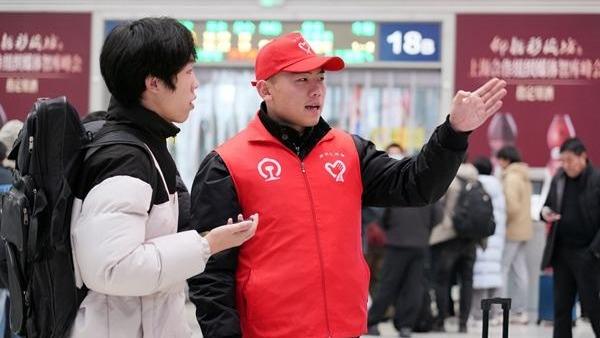
The survey moved to high-speed rail carriages. One passenger filling out the form told Zhou Xiaoying it was the first time he had encountered CPPCC members distributing questionnaires on a high-speed train.
The questionnaire distributors included Jia Yulin, former head of the discipline inspection and supervision team dispatched by the Central Commission for Discipline Inspection and the National Commission of Supervision to the Publicity Department of the CPC Central Committee; Li Changjin, former vice chairman of the Tianjin Municipal CPPCC Committee; Zhou Li'an, Dean of the Faculty of Economics and Management, Peking University; Liu Fang, former Secretary-General of the International Civil Aviation Organization; and Yu Ruifen, President of Shanghai Laiyifen Co., Ltd. At that moment, they were all "CPPCC members" from the same group—Special Invitees Group 58.
The 14th National Committee of the Chinese People's Political Consultative Conference (CPPCC) comprises over 2,000 members, who are divided into 58 groups during its plenary sessions. An official from the Proposals Committee Office of the CPPCC National Committee noted that Group 58 exhibits the least commonality but the greatest diversity among all groups, yet it has demonstrated highly effective performance in fulfilling its duties.
From the 5,061 proposals submitted in 2025, the CPPCC National Committee selected 100 "Annual Outstanding Proposals". The only group proposal among them came from Group 58.
When talking about their group, these "specially invited personages" exude pride.
"This is truly a distinctive group", said Wang Jian, an Academician of the Chinese Academy of Engineering from Alibaba Group, with a smile to reporters. He noted that he "greatly enjoys" the atmosphere of Group 58. Guo Jihui, Executive Director of Hong Kong's Sun Hung Kai Properties, described the group as one that "gathers distinguished talents with special expertise".
There are currently 41 members in Group 58. The youngest is Guo Jihui, born in 1983. The most senior in terms of CPPCC membership is Sangding Dugzha Pamo Deqen Qozain, a female living Buddha of Tibetan Buddhism, who has served nine consecutive terms. The group comprises several members of the Chinese Academy of Sciences and Chinese Academy of Engineering, vice provincial governors, scions of established families and distinguished experts spanning multiple disciplines — constituting a collective distinguished by both societal breadth and academic depth.
Under the CPPCC Charter, in addition to representatives from political parties, social groups, and ethnic groups, the National Committee includes "specially invited personages", who participate as individuals rather than institutional delegates.
The Special Invitation Sector of the CPPCC has historically played a special role in China's democratic processes. The 1st Plenary Session of the CPPCC in 1949 included a "specially invited personages" category, featuring Soong Ching Ling, architect Liang Sicheng, and Peking Opera master Mei Lanfang.
Sociologist Fei Xiaotong observed the 1949 CPPCC session as follows: "Seeing people of such diverse backgrounds gathered together for a meeting to discuss the founding of a nation—I had never seen anything like it before."
Today, members of Special Invitees Group 58 experience an equally profound sense of diversity in their backgrounds.Many CPPCC groups are divided by fields such as education, health, science and technology, as well as agriculture. Wang Jian told reporters that some groups consist mostly of "similar people", whereas Group 58 members have vastly different backgrounds—making it more quintessentially CPPCC in spirit. In the CPPCC, a specialized consultative body, "everyone being different" is itself a strength.
Someone joked with Zhou Xiaoying, convener of Group 58, that the group is a "miniature CPPCC".
In three years of service, Guo Jihui’s foremost observation is this—The very diversity among the members constitutes Group 58's premier strength; extensiveness embodies the CPPCC’s essence of "solidarity and unity". Diverse backgrounds enable genuine "cross-border brainstorming" in discussions, he said.
He cited the group’s Annual Outstanding Proposal “Proposal on Promoting In-depth Integration of Industry, Education and Research Led by Enterprises to Boost Development of New Quality Productive Forces”. Discussions drew multi-dimensional perspectives from science and technology, finance, education, and enterprise, resulting in more professional and actionable suggestions.
But on March 2023, when these members first attended the session as 14th CPPCC National Committee members, Zhou Xiaoying worried about finding common ground for discussion.
To liven the mood and build familiarity, they launched a "self-initiated activity" between meetings—what Zhou called "mini-lectures". After COVID-19, health has been people’s priority. Group 58 invited Ge Junbo, an Academician of the Chinese Academy of Sciences and cardiovascular expert, to deliver a lecture on General Secretary Xi Jinping’s important expositions on the Healthy China initiative and share prevention and healthcare knowledge.
As a group convener, Ge Junbo felt it was his "unshirkable duty".
The lecture convened one evening. When word spread among members, delegates from other sections flocked to attend, commending Group 58 for its intellectual vibrancy.
Following widespread curiosity about religious matters, Group 58 conducted a lecture on Tibetan Buddhist history. Many members subsequently engaged in substantive exchanges with Buddhist community representatives within the group.
At the 2025 Two Sessions, artificial intelligence drew intense attention. Naturally, Wang Jian gave a lecture linking AI trends to new quality productive forces.
Zhou Xiaoying said these activities imparted new knowledge to people while enhancing mutual understanding and building consensus.
Contrary to her expectations, Group 58 meetings are extremely lively. Speaking time had to be controlled at the first session.
Speakers were allotted five minutes per presentation in principle, with a queue looming behind. Those exceeding the limit received written reminders from staff enforcing the time discipline.
Zhou Xiaoying believes conveners must uphold the dialectical unity of commonality and diversity. Commonality provides direction; diversity fuels vitality. Without diversity, commonality cannot exist. CPPCC members come from all walks of life with differing views; the goal is to draw the "broadest possible consensus circle" and extend the "radius of inclusive diversity".
Wang Guilin, Vice Chairman of the Guangzhou Municipal Committee of CPPCC, frequently finds others’ presentations illuminating. He routinely requests copies of the speeches to review their substance in greater depth.
At the CPPCC National Committee, the Committee for Proposals liaises with Special Invitees Group 58. Zhou Xiaoying said the committee "attaches great importance and shows exceptional care" to Group 58, actively soliciting its views before setting annual research plans and consultation topics.
In 2025, the Committee for Proposals convened its first dedicated symposium for Group 58 members, designating a liaison director from the office to coordinate with the delegation.
Wang Guilin recalled that during the symposium, members observed that the group lacked permanent institutional backing and were geographically dispersed during non-session periods. They called for enhanced activity coordination and thematic guidance to facilitate their deliberative functions.
Subsequently, Zhou Xiaoying noted that Group 58 members received regular invitations to learning sessions, field investigations, outreach programs, and proposal-handling consultations—activities encompassing virtually every member.
The group’s focus on food safety in transit scenarios germinated during one such initiative. In October 2025, the CPPCC Committee for Handling Proposals convened an event in Shanghai. Participants from Group 58 included Zhou Xiaoying, Yu Ruifen, and another convener Yuan Yaxiang, an Academician of the Chinese Academy of Sciences.
Yu Ruifen proposed that the group’s collective research focus for the upcoming year could address food safety issues across diverse transit scenarios.
As founder of snack retailer Laiyifen, she established a Committee Member Studio in March 2023 to gather public sentiment—including food safety concerns. Her proposal urging attention to children’s nutritional health and prevention of obesity-induced precocious puberty was designated a National CPPCC Quality Proposal in 2023.
Both Zhou Xiaoying and Yuan Yaxiang endorsed this direction. They resolved to develop questionnaires for preliminary field surveys.
The multidisciplinary strengths of Group 58 manifested at this juncture. Initial plans encompassed catering services across highways, railways, and civil aviation. During topic validation, Liu Fang observed that aviation catering operated under globally aligned standards with mature practices, distinctively featuring bundled pricing—unlike other transit scenarios.
Following her input, aviation catering was excluded from the questionnaire.
Group 58 convened a focused discussion in Beijing, with remote members participating virtually or submitting written inputs.
Reviewing these contributions, Zhou Xiaoying remarked to journalists: "These members approach proposals with academic rigor."
Initially, Group 58 lacked collective proposal awareness until the Proposals Committee prompted collaborative brainstorming.
In 2025, the group advanced two proposals focused on developing new quality productive forces. Zhou Xiaoying noted members' shared concern for innovation in advancing Chinese modernization—one micro-level and one macro-level proposal both secured designation as CPPCC Annual Key Proposals.
"We were profoundly inspired," she stated, "as both struck core policy priorities."
The proposal on "enterprise-led integration of industry, academia, and research" originated from Wang Guilin's preliminary draft.
Wang Guilin described his role as "stimulating deeper insights" — "I initiated the preliminary catalyst." Having served as Director of Guangzhou Municipal Science and Technology Bureau, he consistently advanced technological proposals since becoming a committee member. On March 2 this year, he received the CPPCC National Committee Member Outstanding Performance Award.
Building on the preliminary draft, the group convened a thematic meeting in Beijing during February 2025.
"The paramount principle is a problem-oriented approach," emphasized Qu Qingchao, Dean of China Market Entity Research Institute at Capital University of Economics and Business. "Before formalizing proposals, we insisted on multi-channel investigations, including engagements with science and technology authorities."
Upon contact, the Ministry of Science and Technology responded with high priority, immediately dispatching officials to provide briefings and jointly examine issues.
Members articulated their position directly: their proposals prioritized actionable solutions with measurable impact, hence the in-person engagement.
During discussions, ministry personnel suggested refining the scope—"Could the recommendations demonstrate enhanced focus?"
Qu Qingchao deemed the visit highly productive, enabling deeper comprehension of the "enterprise-led industry-academia-research integration" challenge. Optimization efforts subsequently centered on the "enterprise leadership" framework.
The consensus underpinning this proposal extended far beyond Group 58. Sang Fuhua, Secretary-General of The United Front Work Department of CPC Central Committee, consulted domain experts with the draft. This exemplified standard practice—as Qu summarized, "Each member functions as a nexus, converging multidimensional insights."
The final version indeed embodied "the crystallization of collective wisdom." During the preparatory session of Group 58 at the 2025 CPPCC National Committee Plenary Meeting, the text underwent comprehensive deliberation by all members.
Wang Guilin observed that the finalized proposal demonstrated heightened thematic focus and precision. Drawing on his dual experience—both drafting proposals as a member and implementing them as a former government official—he emphasized "strategic alignment" as paramount.
Months later, the Ministry of Science and Technology convened joint efforts with the Ministry of Education, Ministry of Finance, and National Natural Science Foundation to process the proposal. Wang participated in the consultation meeting and deemed the process exemplary. Clear delineations were provided regarding implementable recommendations versus areas requiring further refinement.
Qu Qingchao recalled submitting additional inputs prior to the official response formulation, prompting institutionalized refinements by the Ministry of Science and Technology.
His data analysis of 2025-2026 policy trajectories revealed measurable alignment with their recommendations.
To Zhou Xiaoying, Qu reflected that initial perceptions of the proposal as a "procedural burden" transformed into recognizing its "substantive dividends."
He noted to journalists that convenors like Zhou Xiaoying and Li Changjin demonstrated "exemplary diligence commanding profound respect"—their conduct fundamentally galvanizing collective engagement.
Theoretically, Group 58 by Special Invitation exists only during the CPPCC National Committee Plenary sessions. As members attend the conference, the majority of their time is spent in group meetings. Upon adjournment, the group’s mandate is temporarily suspended. Without active convening by the coordinators, members would disperse to their respective responsibilities.
Yet Group 58’s defining narrative unfolds post-session.
Members leverage Beijing visits to convene impromptu deliberations. Many aspire to have their proposed topics adopted by the group—a process subject to democratically vetted selection protocols.
Zhou Xiaoying noted that last year's proposal profoundly catalyzed members' sense of accomplishment and responsibility, yielding heightened engagement in their duties.
These post-session endeavors constitute an "institutional extension of CPPCC conferences" in Qu Qingchao's assessment. Through participation, he gained deeper insights into China's governance architecture and operational nuances, as well as the substantive manifestations of whole-process people's democracy.
The member reflected that while Group 58 functions as a compact unit, it epitomizes the CPPCC's institutional character—particularly its capacity to forge synergistic convergence from diverse forces. (By Li Yuanyuan, Zhang Guo, Qin Zhenzi/China Youth Daily)